When you click the link, it will take you to the corresponding page.
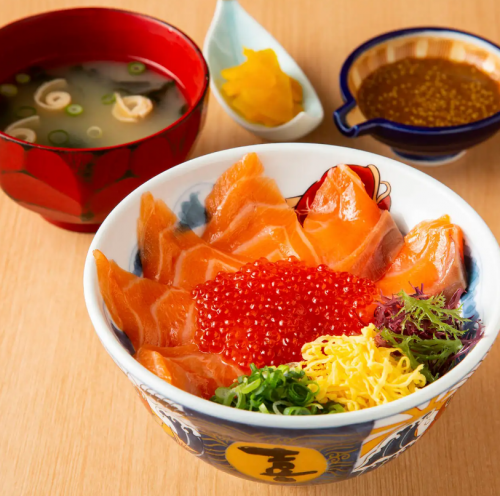
筋子とサーモンの親子丼
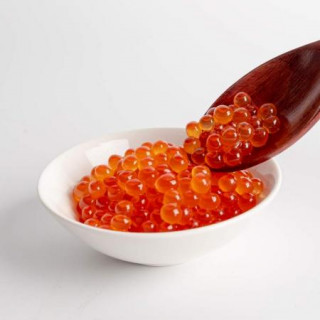
In Japan, salmon roe, which is highly popular as a topping for Gunkan sushi or rice bowls, is referred to as 'ikura' (いくら) or 'sujiko' (筋子) in Japanese. 'Sujiko' indicates a clustered state where a membrane connects the eggs. At the same time 'ikura' refers to the separated state where the membrane has been removed, resulting in individual beads of salmon roe commonly placed on sushi or rice bowls. When the eggs are scattered individually, they are also called 'barako' (ばら子), derived from the term 'barabara' (バラバラ), meaning scattered or dispersed. The origin of 'ikura' comes from the Russian word 'икра' (ikra), which means fish roe. However, in Japanese, 'ikura' refers explicitly to roe from the salmon family, while in Russian, 'икра' is a general term encompassing roe from various fish species, including salmon. The method of consuming salmon roe without heating but marinating it, also originated in Russia. Initially, it started with a salt curing method, but marinating in sweet soy sauce has recently become more prevalent.